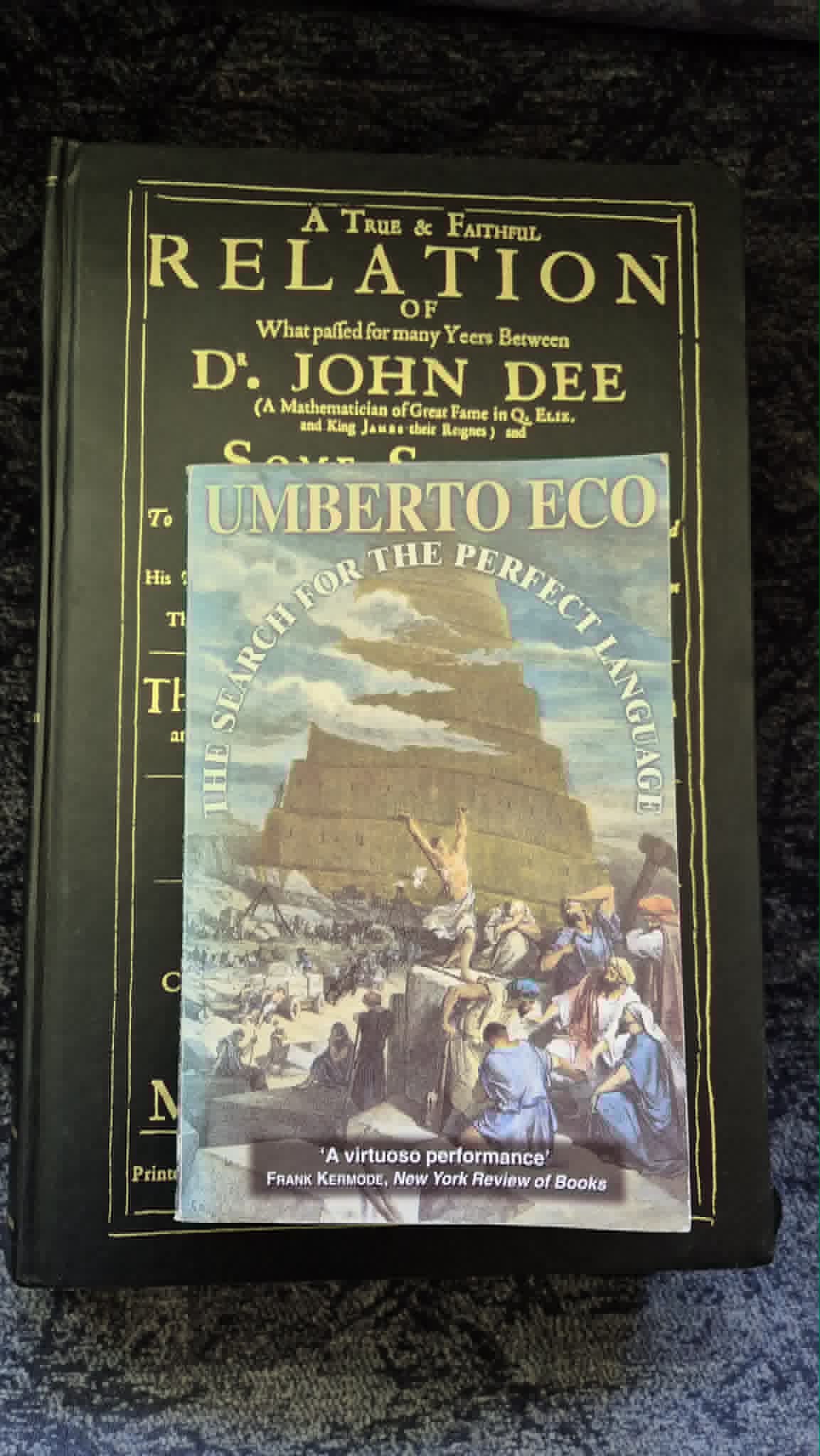
In the 1580s, John Dee and Edward Kelley conducted many remarkable conversations with several angels. Most of Dee’s original records and diaries survive and have been widely reproduced in editions and commentaries, from the famous 1659 A True and Faithful Relation of Meric Causabon, to the fastidious textual analysis of Aaron Leitch in The Angelical Language. There is even a dictionary of the angelical speech in The Complete Enochian Dictionary by Donald Laycock.
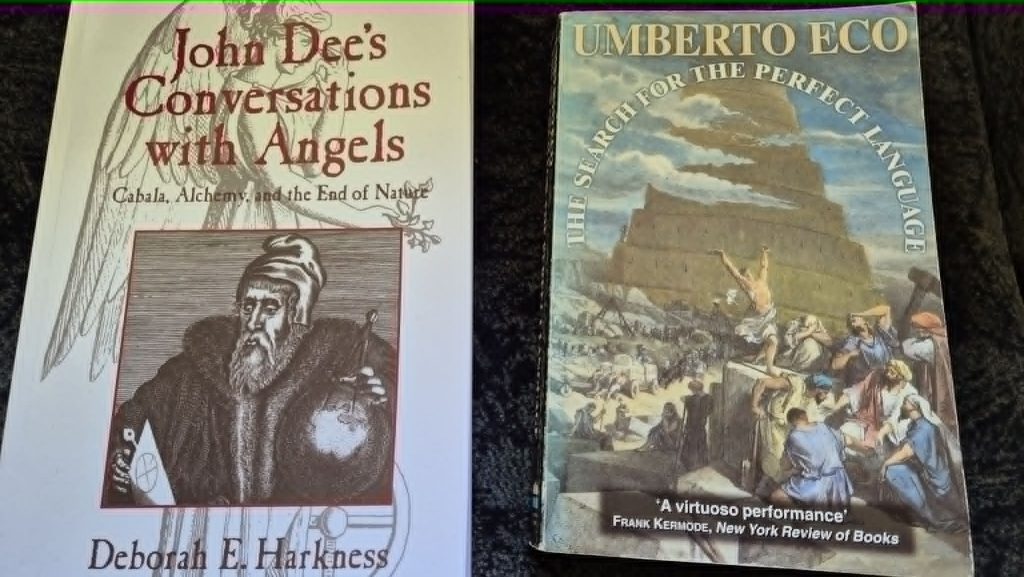
These conversations demand a meta-analysis. What was the cultural and social background that determined the specific form of the communications? What works, accessible to both Dee and Kelley, seem to have influenced the content of the angel’s concerns? Why do the angels communicate in good, everyday English but also have another language, a special language? An overview can be found in the excellent John Dee’s Conversations with Angels by Deborah Harkness
Something that has always interested me is the presumption that the angels speak their own language. They can converse in English, but in private they would seem to converse in a speech called Enochian. Or perhaps they provide Enochian as an intermediate speech for us to use. Perhaps they have an even more recondite language.
The Old Testament book of Genesis is filled with hints of ancient languages, languages that were spoken before human consciousness was degraded by disobedience. In the beginning, God created light and dark, night and day, with acts of speech. There was the conversation of Adam and Eve before the Fall, and their speech after the Fall. There was the speech before Babel, and the speech that survived Noah’s Flood. And of course there is the native speech of angels, who are privy to God’s intentions and instrumental in his acts and governance.
The suspicion that common speech is degraded and utilitarian is ancient and enduring. What if there was a better language, a more perfect language, a language more closely aligned with the spiritual nature of the creation?
A book that addresses this specific thought is Umberto Eco’s The Search for the Perfect Language. Most people will know Eco as the novelist who wrote The Name of the Rose, and Foucault’s Pendulum. Although a capable novelist, he was principally a scholar of vast erudition, and this book is an example. It may task one’s endurance. I find I have to pick it up and put it down, read a chapter and come back to it when time has soothed my overload. It is an extraordinary achievement in its span and its depth. Every chapter is a shotgun blast of fascinating detail.
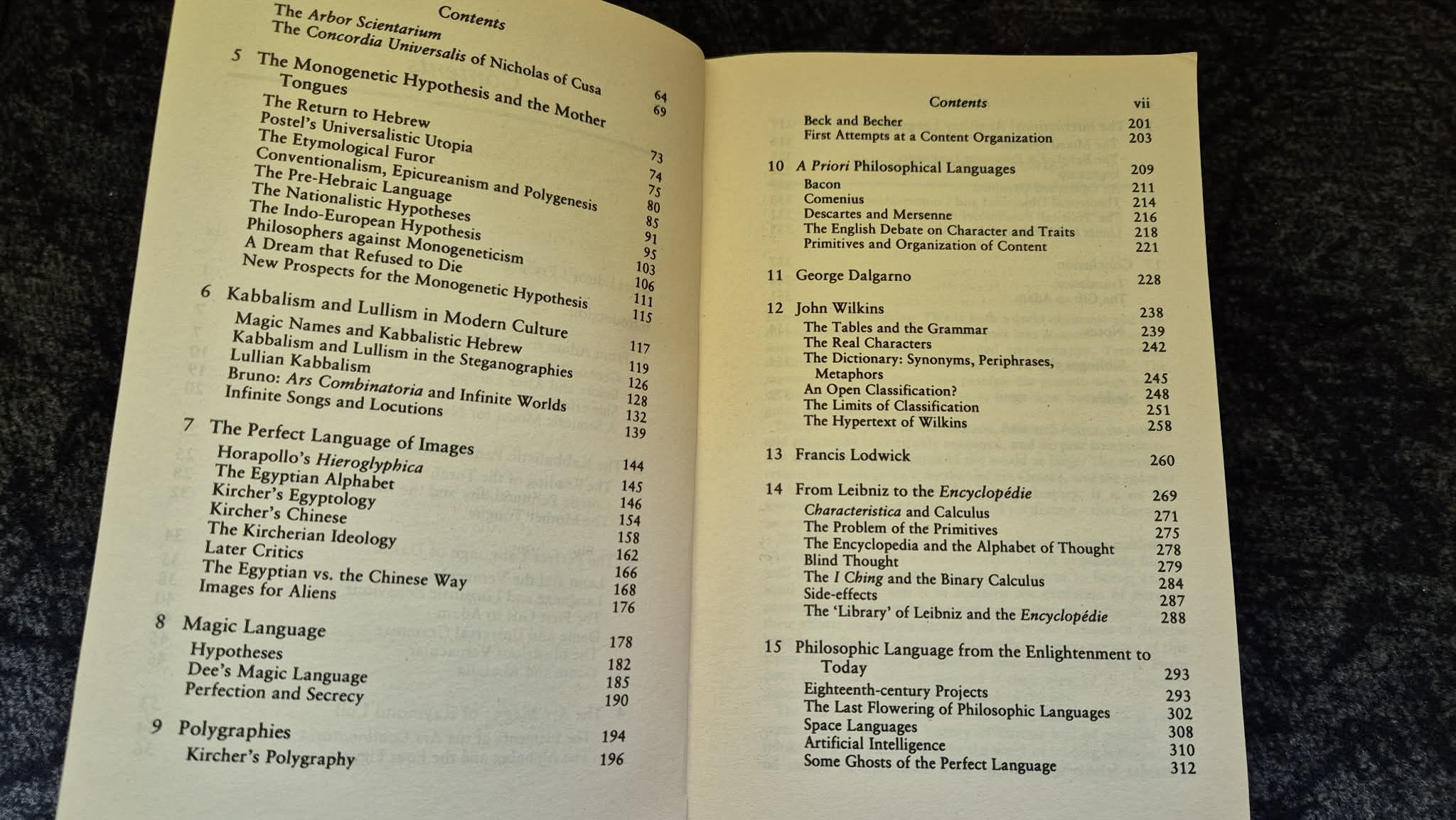
Eco covers the entire history of the belief that language is handicapped by limitations, limitations that might (in some better world) be removed, taking us from the first chapters of Genesis to analytic philosophy. Would a better language remove the possibility of deception, of fake news? Would it cripple the Devil, who is the Father of Lies? Would it require a refinement of the soul, a dissolution of objective and subjective? There are no answers.